
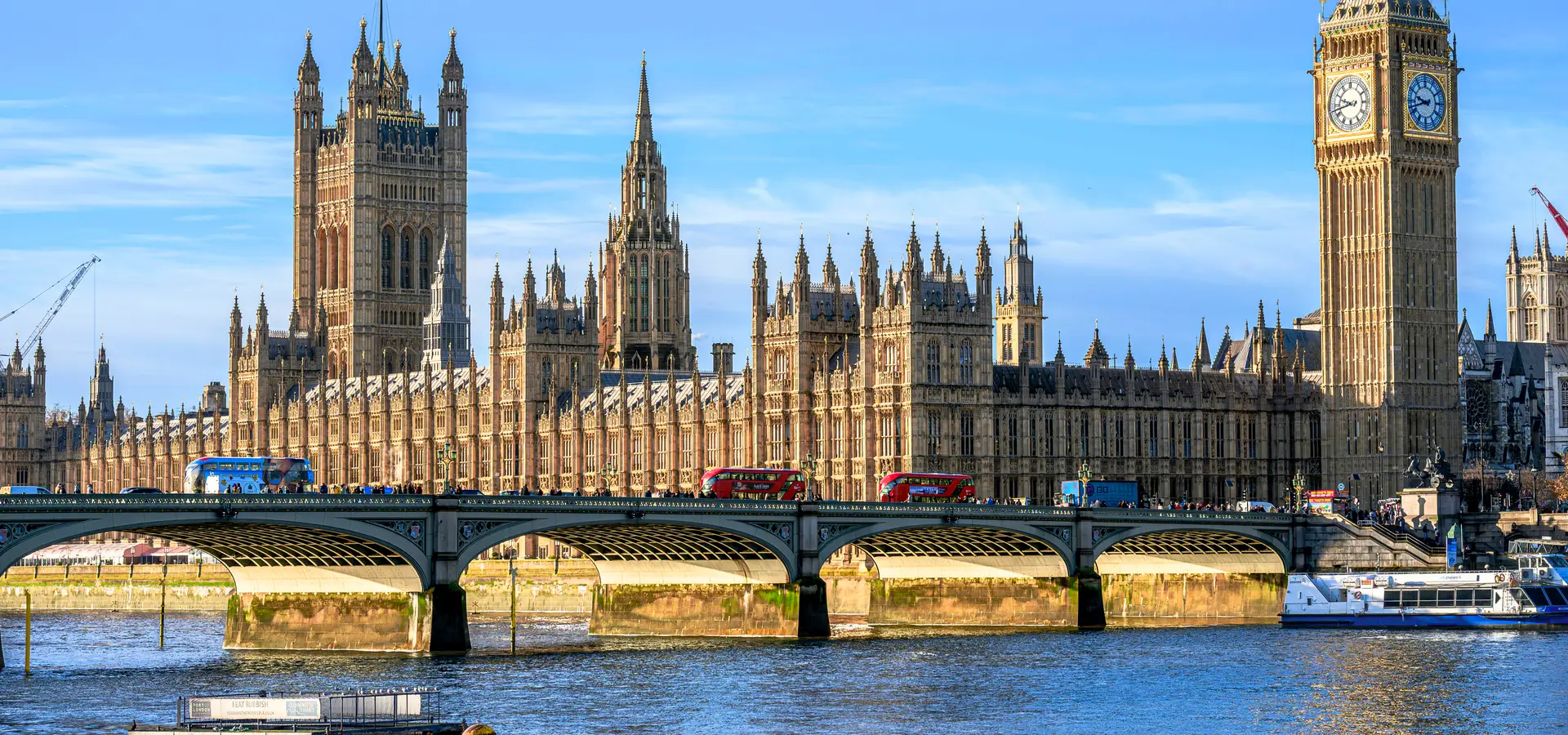
About the university
The Royal Veterinary College (RVC) was founded in 1791 and is a specialist college for veterinary medicine, veterinary nursing and biological sciences. It teaches at its Camden campus in London and its Hawkshead campus in Hertfordshire, which has a student village.
Indian students mainly look at the five-year BVetMed, which is accredited in the UK, Europe and North America, and at the BSc and MSc programmes in bioveterinary and wildlife science. International fees for 2026/27 are £50,360 a year for veterinary medicine and £27,510 a year for the BSc degrees; the one-year MSc Wild Animal Health and Wild Animal Biology cost £33,650 for 2026 entry.
- Founded
- 1791 (resolved at a meeting at the Blenheim Coffee House on 18 February 1791)
- Type
- Public specialist college for veterinary medicine, veterinary nursing and biological sciences
- Campuses
- Camden in London and Hawkshead in Hertfordshire (about 20 minutes by train from London)
- Accreditation
- BVetMed accredited by the RCVS (UK), EAEVE (Europe) and AVMA (USA and Canada; currently probationary status)
- Intake
- September; English requirements must be met by 31 July
Rankings
Popular courses with Indian students
- Undergraduate
Bachelor of Veterinary Medicine (BVetMed)
- Fee / year
- £50,360
- Duration
- 5 years (Camden in years 1–2, Hawkshead in year 3, clinical placements in years 4–5)
- Intakes
- September
- English
- IELTS at the RVC's 6.5 (6.0 in each component) or 7.0 (6.5 in each) level, depending on the programme; check with admissions
- Undergraduate
- Fee / year
- £27,510
- Duration
- 3 years (optional placement year), Camden
- Intakes
- September
- English
- IELTS at the RVC's 6.5 (6.0 in each component) or 7.0 (6.5 in each) level, depending on the programme; check with admissions
- Undergraduate
- Fee / year
- £27,510
- Duration
- 3 years (optional placement year), Camden
- Intakes
- September
- English
- IELTS at the RVC's 6.5 (6.0 in each component) or 7.0 (6.5 in each) level, depending on the programme; check with admissions
- Undergraduate
BSc Animal Biology, Behaviour, Welfare and Ethics
- Fee / year
- £27,510
- Duration
- 3 years (optional placement year)
- Intakes
- September
- English
- IELTS at the RVC's 6.5 (6.0 in each component) or 7.0 (6.5 in each) level, depending on the programme; check with admissions
- Postgraduate
- Fee / year
- £33,650
- Duration
- 1 year full time
- Intakes
- September
- English
- IELTS Academic 7.0 (6.5 in each component)
- Postgraduate
- Fee / year
- £33,650
- Duration
- 1 year full time
- Intakes
- September
- English
- IELTS Academic 7.0 (6.5 in each component)
Fees for international students
| Course | Duration | Fee / year (GBP) | Approx. in rupees |
|---|---|---|---|
| Bachelor of Veterinary Medicine (BVetMed) | 5 years (Camden in years 1–2, Hawkshead in year 3, clinical placements in years 4–5) | £50,360 | ≈ ₹61.4 lakh |
| BSc Bioveterinary Sciences | 3 years (optional placement year), Camden | £27,510 | ≈ ₹33.6 lakh |
| BSc Biological Sciences | 3 years (optional placement year), Camden | £27,510 | ≈ ₹33.6 lakh |
| BSc Animal Biology, Behaviour, Welfare and Ethics | 3 years (optional placement year) | £27,510 | ≈ ₹33.6 lakh |
| MSc Wild Animal Health | 1 year full time | £33,650 | ≈ ₹41.1 lakh |
| MSc Wild Animal Biology | 1 year full time | £33,650 | ≈ ₹41.1 lakh |
Fees are for international students for the entry year shown on each course page and can rise each year. Approximate exchange rates (based on ECB reference rates, March 2026). Actual rates on your payment date will differ.
Want a course shortlist with fees?Our counsellor will compare courses at Royal Veterinary College with similar universities in the UK.
Scholarships
Admission requirements
Undergraduate
- International applicants must meet the RVC's prescribed qualifications or send their qualification details to RVC admissions for assessment.
- BVetMed is a five-year degree (UCAS code D100); the RVC also offers BVetMed with an Intercalated Year and a Graduate Accelerated BVetMed.
- English language requirements must be met by 31 July for a September start.
Postgraduate
- MSc Wild Animal Health needs a first or second-class honours veterinary degree and at least one year of postgraduate veterinary experience.
- MSc Wild Animal Biology needs a first or second-class honours degree (or international equivalent) in a science subject.
Documents
- Valid passport
- Class 10 and Class 12 mark sheets (undergraduate)
- Degree certificate and transcripts (postgraduate)
- English test result
- Personal statement and references
Check if you are eligibleShare your marks and test scores and our counsellor will tell you which courses you can apply for.
English language requirements
| Test or route | Typical requirement |
|---|---|
| IELTS Academic | Two levels, depending on the programme: 6.5 with at least 6.0 in each component, or 7.0 with at least 6.5 in each; the MSc wildlife courses need 7.0 (6.5) |
| TOEFL iBT | 93 (no section below 23) at the 6.5 level; 101 (no section below 23) at the 7.0 level |
| PTE Academic | 65 (59 in each section) at the 6.5 level; 69 (62 in each section) at the 7.0 level |
| Cambridge C1 Advanced / C2 Proficiency | 176 (169 per section) at the 6.5 level; 185 (176 per section) at the 7.0 level |
| Not listed | Duolingo and Class 12 English are not listed on the RVC's English requirements page |
Accommodation and living costs
The RVC offers halls at both campuses. In Camden, College Grove (on site) and Mary Brancker House (Kentish Town, bills included) have en suite rooms, and students can also apply to the intercollegiate Garden Halls. At Hawkshead, the Student Village and Odiham Hall include utility bills. Rooms are not guaranteed. Prices below are the latest published (Camden 2025/26, Hawkshead 2024/25).
| Item | In GBP | Approx. in rupees |
|---|---|---|
| College Grove or Mary Brancker House, Camden (en suite)2025/26; 48-week (College Grove) or 50-week (Mary Brancker House) contract | £286per week | ≈ ₹34,862 |
| Garden Halls (intercollegiate)2025/26; 40-week contract | £304–324per week | ≈ ₹37,111 – ₹39,579 |
| Student Village or Odiham Hall, Hawkshead2024/25; bills included | £160per week | ≈ ₹19,520 |
Campus and location
BVetMed students start at the Camden campus in London and move to the Hawkshead campus in Hertfordshire for year 3, before clinical placements in years 4 and 5.
- Camden: early years of BVetMed and the BSc biological sciences programmes.
- Hawkshead: year 3 of BVetMed and the Student Village; London is about 20 minutes by train.
- The RVC covers travel for core rotations away from Hawkshead and provides accommodation for core rotations outside London.
- BVetMed placements are busy, so paid work alongside them is usually not feasible.
Careers and graduate outcomes
BVetMed graduates register with the RCVS and, subject to visa status, can practise in Europe and, through reciprocal arrangements, in Australia, New Zealand, Ireland and South Africa. Graduates who want to work in North America sit the NAVLE, for which the RVC runs a support programme. See our UK guide for the Graduate visa.
| What | Figure | Source |
|---|
Studying in the UK
Visa rules, work rights and living costs apply to every university in the UK. Our country guide covers them in detail:
Other universities in the UK

Photo: Hampshire County Council, OGL 3 PublicUniversity of Southampton (official website, opens in a new tab)
 Southampton, United Kingdom
Often chosen for Engineering, Computer Science & IT, Data Science & AI

Photo: DrPhoenix, CC BY-SA 3.0 PublicThe University of Manchester (official website, opens in a new tab)
Manchester, United KingdomOften chosen for Engineering, Business & Management, Life Sciences

Photo: Tim Green from Bradford, CC BY 2.0 PublicUniversity of Leeds (official website, opens in a new tab)
Leeds, United KingdomOften chosen for Business & Management, Engineering, Arts, Design & Media

Photo: Diliff, CC BY 3.0 PublicUniversity of Glasgow (official website, opens in a new tab)
Glasgow, United KingdomOften chosen for Life Sciences, Computer Science & IT, Law

Photo: Oscar Taylor, CC BY-SA 2.0 PublicCoventry University (official website, opens in a new tab)
Coventry, United KingdomOften chosen for Business & Management, Engineering, Arts, Design & Media

Photo: Simonham, CC BY-SA 3.0 PublicUniversity of Birmingham (official website, opens in a new tab)
Birmingham, United KingdomOften chosen for Business & Management, Engineering, Law
FAQs
How much does veterinary medicine cost at the RVC?
The international fee for the BVetMed is £50,360 a year for 2026/27 entry, for five years. BSc degrees cost £27,510 a year.
What IELTS do I need?
The RVC uses two levels: 6.5 with 6.0 in each component, or 7.0 with 6.5 in each. The MSc wildlife courses ask for 7.0 with 6.5 in each component. Requirements must be met by 31 July.
Can I work in India or elsewhere after a BVetMed?
The RVC says BVetMed graduates can register to practise in Europe and, through reciprocal arrangements, in Australia, New Zealand, Ireland and South Africa, subject to visas. Check the Veterinary Council of India's own rules for practising in India.
Is accommodation guaranteed?
No. Halls at Camden and Hawkshead are subject to availability. Camden en suite rooms were £285.75 a week in 2025/26.
Sources
- RVC: Tuition fees for home and international students (opens in a new tab)
- RVC International Prospects 2026-2027: BVetMed (page 22) (opens in a new tab)
- RVC International Prospects 2026-2027: BSc courses (page 16) (opens in a new tab)
- RVC: MSc Wild Animal Health (opens in a new tab)
- RVC: MSc Wild Animal Biology (opens in a new tab)
- RVC: English language requirements (opens in a new tab)
- RVC: Camden accommodation (opens in a new tab)
- RVC: Hawkshead accommodation (opens in a new tab)
- RVC Library: Historical Collection (opens in a new tab)
Official website: www.rvc.ac.uk (opens in a new tab)
Check the latest details