
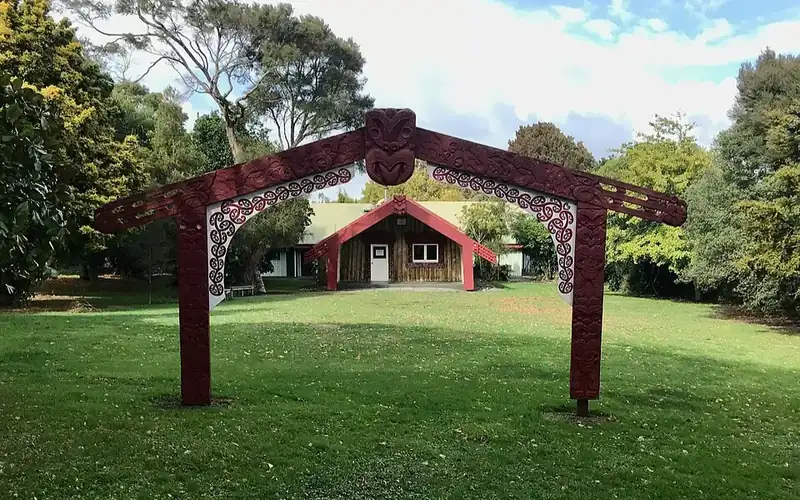
About the university
Te Wānanga o Aotearoa is a public wānanga, a Māori tertiary institution, with more than 80 locations around New Zealand. It began in 1983 with the O-Tāwhao Marae project at Te Awamutu College, became the first private training establishment registered in New Zealand in 1989, and was recognised as a wānanga in 1993. Many of its Mātauranga Māori programmes, such as te reo and tikanga Māori at Level 4 and below, are fee-free for domestic students.
Its website is written for domestic learners and does not publish international tuition fees or an international admissions page. An international learner policy exists, but its last update was in 2016, so Indian students should contact the wānanga directly to ask whether any programme is open to them on a student visa.
- Founded
- 1983 in Te Awamutu; recognised as a wānanga in 1993 and renamed Te Wānanga o Aotearoa in 1994
- Type
- Public wānanga (Māori tertiary institution)
- Locations
- 80+ locations across New Zealand, including Te Awamutu, Hamilton, Auckland, Wellington, Christchurch and Dunedin
- Focus
- Te reo Māori, tikanga Māori and other programmes
- International fees
- Not published
Rankings
Popular courses with Indian students
Te Wānanga o Aotearoa doesn't publish course-by-course fees for international students online. See the courses on the official website (opens in a new tab), or ask our counsellor for the current list and fees.
Scholarships
Admission requirements
Undergraduate
- No international entry requirements are published. Contact Te Wānanga o Aotearoa before applying.
- Its international learner policy says it must check that each student has the immigration status needed to study in New Zealand.
Postgraduate
- No international entry requirements are published for higher-level programmes.
Documents
- Passport
- Class 10 and Class 12 mark sheets (and degree documents if relevant)
- Evidence of English proficiency
Check if you are eligibleShare your marks and test scores and our counsellor will tell you which courses you can apply for.
English language requirements
| Test or route | Typical requirement |
|---|---|
| English requirement | Not published for international students; ask the wānanga |
| Language of teaching | Many programmes teach te reo Māori and tikanga Māori |
| Class 12 English waiver | Not offered on the pages reviewed |
Accommodation and living costs
Te Wānanga o Aotearoa does not publish student accommodation or costs on the pages reviewed.
| Item | In NZD | Approx. in rupees |
|---|
Campus and location
The wānanga teaches at more than 80 locations across New Zealand, with O-Tāwhao Marae in Te Awamutu described as its spiritual home.
- Campuses include Te Awamutu, Hamilton, Auckland, Wellington, Christchurch and Dunedin.
- Many te reo and tikanga Māori programmes at Level 4 and below are fee-free for domestic students.
- From Semester A 2027, fees apply to all Level 5+ programmes and some Level 3–4 programmes.
Careers and graduate outcomes
Te Wānanga o Aotearoa publishes no graduate outcome figures on the pages reviewed. See our New Zealand guide for work rules.
| What | Figure | Source |
|---|
Studying in New Zealand
Visa rules, work rights and living costs apply to every university in New Zealand. Our country guide covers them in detail:
Other universities in New Zealand

Photo: Colin Rose from Montreal, Canada, CC BY 2.0 PublicUniversity of Auckland (official website, opens in a new tab)
 Auckland, New Zealand
Often chosen for Engineering, Business & Management, Medicine & Health Sciences

Photo: ArtNewNZ, CC BY-SA 4.0 PublicUniversity of Otago (official website, opens in a new tab)
Dunedin, New ZealandOften chosen for Medicine & Health Sciences, Life Sciences

Photo: Panamitsu, CC BY-SA 4.0 PublicVictoria University of Wellington (official website, opens in a new tab)
Wellington, New ZealandOften chosen for Law, Computer Science & IT, Arts, Design & Media

Photo: Photograph by Greg O'Beirne, CC BY-SA 3.0 PublicUniversity of Canterbury (official website, opens in a new tab)
Christchurch, New ZealandOften chosen for Engineering, Computer Science & IT, Business & Management

Photo: Sophbuchan, CC BY-SA 4.0 PublicAuckland University of Technology (AUT) (official website, opens in a new tab)
Auckland, New ZealandOften chosen for Computer Science & IT, Business & Management, Nursing & Allied Health

Photo: Michal Klajban, CC BY-SA 4.0 PublicMassey University (official website, opens in a new tab)
Palmerston North, New ZealandOften chosen for Business & Management, Life Sciences, Arts, Design & Media
FAQs
Can Indian students study at Te Wānanga o Aotearoa?
Its website does not publish an international admissions route or international fees. Contact the wānanga directly to ask whether any programme is open to student-visa holders.
Are its programmes free?
Many Mātauranga Māori programmes at Level 4 and below are fee-free, but this is for domestic students, who must be NZ citizens or residents (or Australians living in NZ).
Where is it based?
It began in Te Awamutu and now has more than 80 locations across New Zealand.
Sources
- Te Wānanga o Aotearoa: home page (opens in a new tab)
- Te Wānanga o Aotearoa: 40 years (opens in a new tab)
- Te Wānanga o Aotearoa: fees and financial support (opens in a new tab)
- Te Wānanga o Aotearoa: terms and conditions of enrolment (opens in a new tab)
- Te Wānanga o Aotearoa: International Tauira Recruitment and Engagement Policy (2016) (opens in a new tab)
Official website: www.twoa.ac.nz (opens in a new tab)
Check the latest details